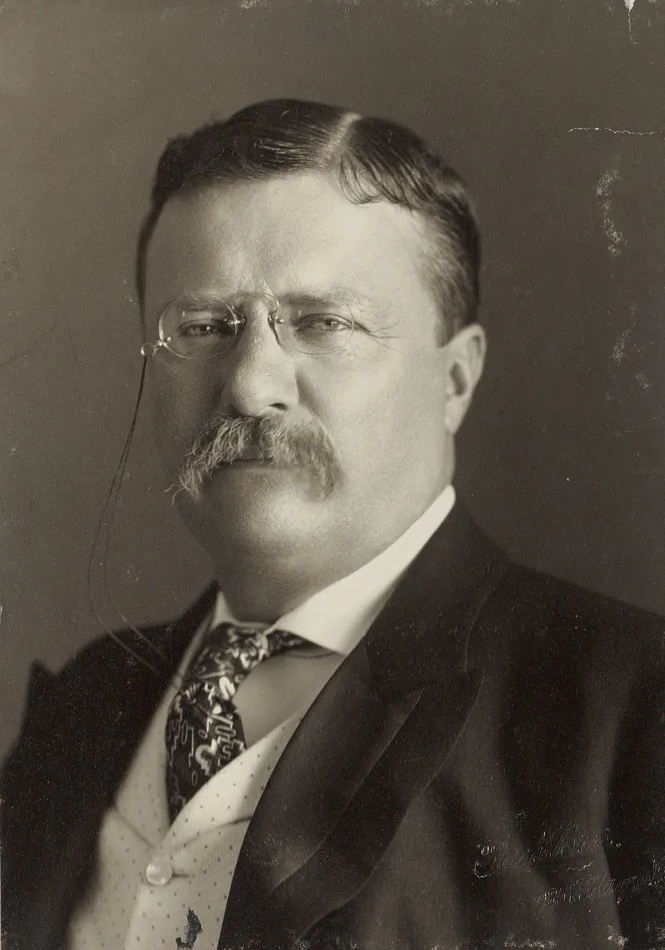
What Roosevelt actually meant.
When Theodore Roosevelt coined the phrase "Square Deal" in 1903, he was not describing a government that promised to solve every problem. He was describing a government that would stop picking winners. The deal was simple: no special privileges for the powerful, no exclusion of the ordinary citizen. Every person who came before the law or the public office would be measured by the same standard.
That sounds obvious. It was not obvious then, and if we are honest, it is not fully practiced now.
"A man who is good enough to shed his blood for his country is good enough to be given a square deal afterwards." — Theodore Roosevelt, 1903
What a square deal looks like in a county coroner's office.
The Coroner's office is not a place most people think about until the worst day of their lives. On that day, a family walks through the door carrying grief, confusion, and sometimes deep suspicion — suspicion that their loved one's death will not get the same attention as someone else's. That suspicion is not unfounded. It is born from decades of watching institutions apply different levels of care to different kinds of people.
A square deal in the Coroner's office means:
- Every death gets the same rigorous, impartial investigation — regardless of who the person was, where they lived, or who is asking questions.
- Every family gets a straight answer — not institutional language designed to close a case, but honest, plain-spoken findings.
- Every dollar spent by this office is accounted for publicly — because taxpayers fund this office and they are owed transparency.
- Every complaint or concern gets a real response — not a form letter, not silence.
Why it still takes saying out loud.
Roosevelt had to say these things plainly because the era he governed was one of concentrated power and comfortable corruption. The bosses and the trusts had grown so accustomed to the arrangement that reformers had to be specific: here is what equal treatment looks like, step by step.
We are not so different. Local government is full of quietly accepted arrangements — offices that have always operated a certain way, processes that are never examined because no one with standing to complain has ever been listened to. A candidate who wants to change that has to say it plainly, too.
I am running for Skagit County Coroner because this office touches families at their most vulnerable, and those families deserve a square deal. Not a better deal than anyone else. The same deal. Applied consistently, documented transparently, and explained honestly.
The free people part.
Roosevelt's phrase was not just about fairness. It was about the condition of freedom itself. A people who cannot trust that their institutions treat them equally are not, in the fullest sense, free. They are subject to the discretion of whoever happens to hold office — and that is a different and diminished thing.
The Coroner's office determines cause and manner of death. It produces the record that shapes how a family grieves, how an estate is settled, how a prosecution proceeds or does not. An office that handles those responsibilities without consistent standards is not a neutral institution — it is a source of arbitrary power over ordinary people.
That is what I am running against. And a square deal — transparent, consistent, and accountable — is what I am running toward.
Truth. Transparency. Trust. These are not campaign slogans. They are the terms of the deal.